Cosmetic recycling, the instructions for use
Whether it’s to preserve natural resources, limit environmental impact, or simply avoid waste: there are countless good reasons to sort our recyclables.
But while many households have adopted selective sorting in the kitchen for food and household waste, many people get confused once they’re in the bathroom.
Can cosmetics and beauty products be recycled, and if so, how? Follow our guide for a more eco-friendly beauty routine!
What do we recycle in the bathroom?
1) Cardboard, paper, steel, and aluminum
We all agree: the best packaging is the one that doesn’t exist! The first step to reducing waste production, unsurprisingly, is to avoid over-packaging. But often, boxes are necessary to protect bottles (especially glass ones) during transport and delivery. All these cardboard boxes, as well as the paper instruction leaflets they contain, can go straight into the yellow bin.
For aluminum packaging, like aerosols, head to the yellow bin as well! So we send all our spray products there: hairspray, dry shampoo, and deodorant.
Also in this same bin, we sort all plastic bottles and their caps. So that’s where we put our shower gels, shampoos, hair masks, and body lotions once finished. Note, if these have a pump, remember to remove it beforehand and throw it in the regular trash.
2) Glass packaging
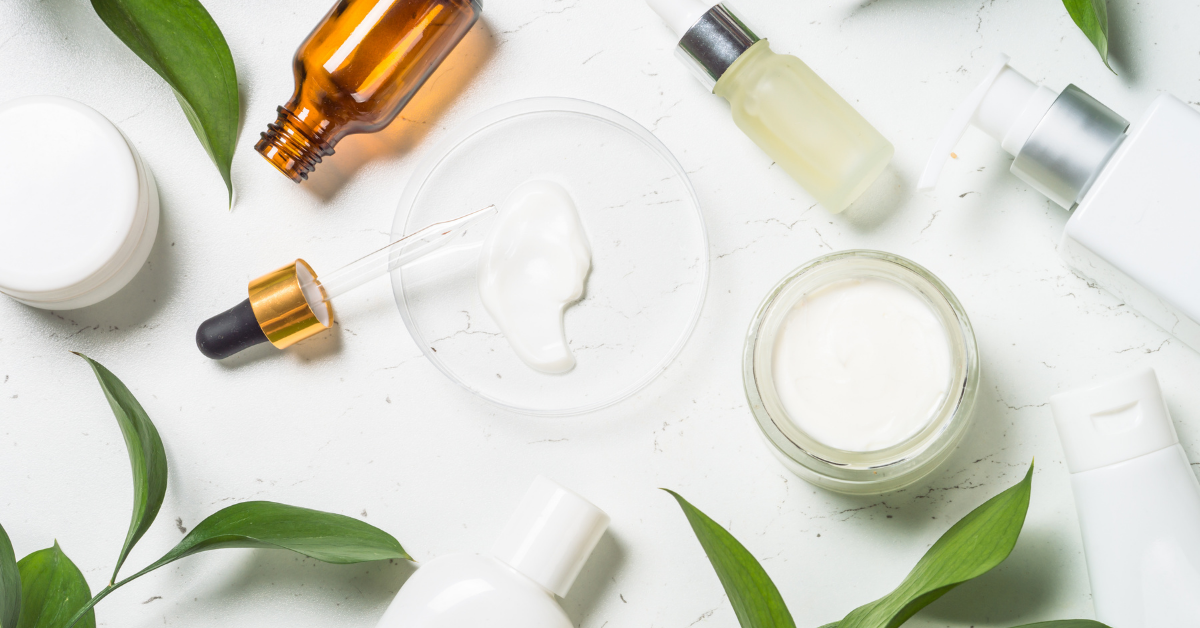
Foundations, serums, day creams: many beauty and wellness products come in beautiful glass bottles. Good news: all these containers can be 100% recycled and given a new life. To do it right, be sure to remove all lids if they are not glass, as well as plastic pumps and seals: these accessories go in the regular trash bin.
3) Tips to make sorting easier (and life simpler!)
When doing less means better results, we love it! Here are 3 tips to keep in mind for even easier selective sorting:
– No need to wash packaging before recycling, just empty them well. A quick wipe inside your empty cream jar and you’re done! This way, no water is wasted.
– For plastic bottles: you can leave the cap on! Easier for you and cleaner in the recycling container at the same time.
– Finally, leaving all packaging loose without nesting them will make separation, sorting, and reuse easier. No need to overdo it!
Note: These sorting instructions may vary locally! To learn more about your city or a specific product, feel free to visit https://www.consignesdetri.fr/.
Some exceptions: these cosmetics we do not recycle:
Unfortunately, not all cosmetic products can yet be recycled and given a new life, including notably:
• Nail polishes
• Makeup (eyeshadows, lipsticks, lip balms, glosses…)
• Stick deodorants
• Plastic pots and tubes (for the latter, here’s a waste-saving tip: be sure to cut off the end before throwing them away to recover all the product!)
Upcycling trend: why recycle when you can reuse?
For products that cannot be recycled, or to give a new life to a finished product, the goal is upcycling! We wholeheartedly embrace this meaningful trend that consists of reusing our products and giving them a new purpose. For example:
– A dry mascara, well cleaned = An eyebrow brush for perfectly shaped brows!
– A glass jar with lid = an ideal container for small pins or earrings when traveling!
– An empty nail polish bottle filled with sweet almond oil = a nail and cuticle treatment!
– A finished scented candle: a pretty decorative pot to hold hairpins, ear picks, or small makeup brushes.
Do you have other upcycling tips? Feel free to share them with us in the comments! And to go further in your zero-waste approach, don’t hesitate to check out our 5 steps to adopt for an eco-friendly beauty routine!
And on our side, what are we doing for the planet?
If you follow us on social media, you know that reducing our carbon footprint is a constant priority. With this in mind, we have designed 100% biodegradable eco-packs for our hotel range, with packaging made from sugarcane. Going further, we are committed to making all Omnisens packaging biodegradable by 2025.